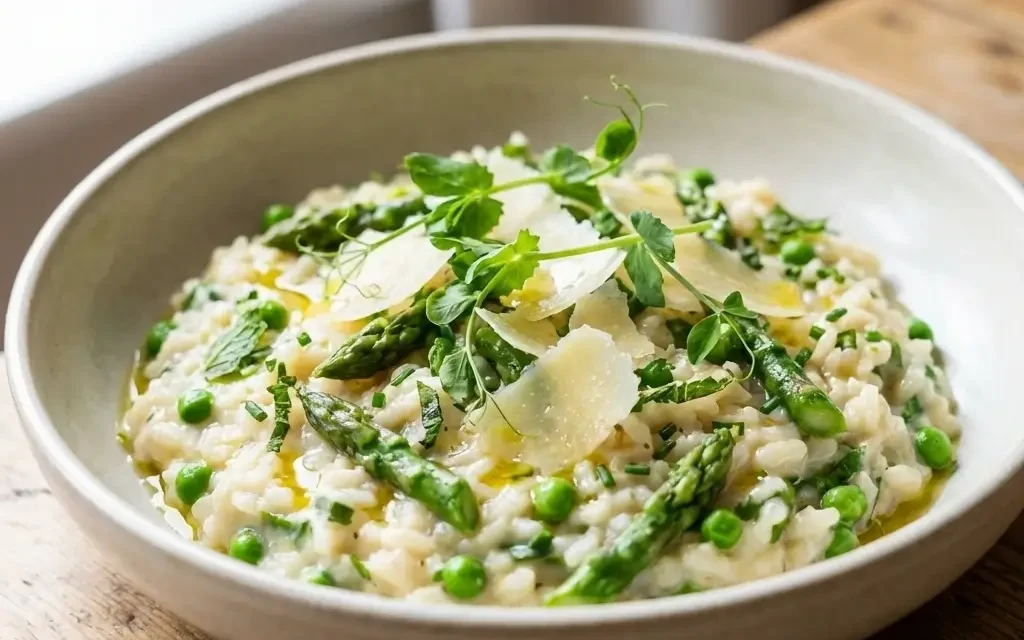
I can still remember the first time I made Spring Vegetable Risotto. It was a chilly spring evening, and I was craving something warm, comforting, and packed with the flavors of the season. As I gathered the ingredients – arborio rice, fresh asparagus, vibrant peas, and a rainbow of vegetables – I knew this dish was going to be something special.
When the risotto started to simmer on the stove, the aroma of garlic, onions, and simmering broth filled my kitchen. I stirred the rice with patience, watching as it slowly released its starch and transformed into a creamy, luxurious base. With each addition of broth, the risotto came alive, absorbing the flavors and developing a velvety texture.
As I stirred, I couldn’t help but marvel at the way the spring vegetables – the tender asparagus, the sweet peas, and the vibrant red bell pepper – complemented the richness of the risotto. It was like a symphony of flavors, each ingredient playing its part to create a harmonious and satisfying dish.
Why This Spring Vegetable Risotto Recipe Will Become Your Go-To
The Secret Behind Perfect Spring Vegetable Risotto
What makes this Spring Vegetable Risotto recipe so special is the perfect balance of flavors and textures. The key is in the slow, patient cooking of the arborio rice, which releases its starch to create a creamy, velvety base. The addition of the fresh spring vegetables – the tender asparagus, the sweet peas, and the crisp bell pepper – adds a wonderful contrast of flavors and textures, making each bite a delightful experience.
The secret to achieving this perfect balance lies in the technique. By gradually adding the vegetable broth, stirring constantly, and allowing the rice to release its starch slowly, you end up with a risotto that is rich, creamy, and bursting with the essence of spring. It’s a dish that showcases the best of the season’s bounty, and it’s sure to become a go-to recipe in your repertoire.
Essential Ingredients You’ll Need
To make this Spring Vegetable Risotto, you’ll need a few key ingredients:
2 cups arborio rice: This short-grain rice is essential for creating the creamy, risotto-like texture. Its high starch content helps the dish achieve its signature creaminess.
4 cups vegetable broth: The broth is the backbone of the dish, providing the liquid that the rice will slowly absorb to become perfectly tender and flavorful.
1 pound asparagus, trimmed and cut into 1-inch pieces: Asparagus is the quintessential spring vegetable, and its tender, earthy flavor adds a wonderful dimension to the risotto.
1 cup frozen peas: These sweet, bright green peas complement the other vegetables and add a lovely pop of color to the dish.
1 red bell pepper, diced: The bell pepper brings a crisp, slightly sweet flavor that balances the creaminess of the risotto.
1 onion, diced, and 3 cloves garlic, minced: These aromatics form the foundation of the dish, providing a savory base for the other ingredients.
1/2 cup grated Parmesan cheese: The Parmesan adds a rich, salty umami note that ties all the flavors together.
2 tablespoons olive oil: The olive oil is used to sauté the vegetables and add a subtle richness to the dish.
Salt and black pepper, to taste: These simple seasonings help to enhance the natural flavors of the ingredients.
Fresh parsley, for garnish: A sprinkle of fresh parsley adds a bright, herbaceous touch to the finished dish.
Step-by-Step Spring Vegetable Risotto Instructions
Preparing Your Spring Vegetable Risotto
This Spring Vegetable Risotto recipe is easy to prepare, with a total time of 45 minutes – 15 minutes of prep and 30 minutes of cooking. To get started, you’ll need a large, heavy-bottomed pot or Dutch oven, a wooden spoon, and a ladle for adding the broth.
1- Begin by heating the olive oil in your pot over medium heat. Add the diced onion and sauté for 3-4 minutes, until it becomes translucent and fragrant.
2- Next, add the minced garlic and stir continuously for 1 minute, taking care not to let the garlic burn. This step helps to release the flavors of the garlic and infuse the oil.
3- Now, add the arborio rice to the pot and stir to coat the grains with the oil. Cook for 2-3 minutes, stirring frequently, until the rice is lightly toasted and gives off a nutty aroma.
4- Gradually add the vegetable broth, one ladleful at a time, stirring constantly. Wait until the rice has absorbed most of the liquid before adding the next ladleful. This slow, patient process is the key to achieving the perfect creamy texture.
5- After about 20 minutes of stirring and adding broth, stir in the diced bell pepper, asparagus, and frozen peas. Continue cooking, adding broth as needed, until the rice is tender and the vegetables are cooked through, about 10-15 minutes more.
6- Finally, remove the pot from the heat and stir in the grated Parmesan cheese. Season with salt and black pepper to taste. Garnish with fresh parsley and serve immediately, while the risotto is hot and creamy.
Pro Tips for Success
- Use freshest, highest-quality ingredients: The spring vegetables are the star of this dish, so be sure to use the freshest and most vibrant produce you can find.
- Stir constantly: Constant stirring is crucial for creating the creamy texture of the risotto. This helps release the starch from the arborio rice.
- Add broth gradually: Pouring in the broth a little at a time, and waiting for it to be absorbed, ensures the rice cooks evenly and the risotto develops its signature creaminess.
- Adjust cooking time as needed: Depending on the exact size of your ingredients and the heat of your stove, you may need to adjust the cooking time slightly. Keep an eye on the texture and doneness of the rice.
- Experiment with variations: Feel free to play around with different spring vegetables, herbs, and seasonings to make the dish your own.
Serving and Storing Your Spring Vegetable Risotto
Perfect Pairings for Spring Vegetable Risotto
This Spring Vegetable Risotto is a delightful main dish that serves 6 people. To round out the meal, consider serving it with a crisp green salad tossed in a light vinaigrette, which will provide a refreshing contrast to the creaminess of the risotto.
For a beverage pairing, a dry white wine like Sauvignon Blanc or Pinot Grigio would complement the dish beautifully, highlighting the fresh, springtime flavors. Alternatively, a glass of sparkling wine or a light, citrusy cocktail would also be a lovely accompaniment.
Storage and Make-Ahead Tips
Leftover Spring Vegetable Risotto can be stored in an airtight container in the refrigerator for up to 3-4 days. To reheat, simply place the risotto in a saucepan with a splash of broth or water, and warm it over medium heat, stirring frequently, until it’s heated through.
For longer-term storage, the risotto can also be frozen for up to 2-3 months. To freeze, allow the risotto to cool completely, then transfer it to a freezer-safe container or bag. When ready to serve, thaw the risotto in the refrigerator overnight, then reheat it on the stovetop as you would with the refrigerated leftovers.
This Spring Vegetable Risotto also makes a great make-ahead meal. You can prepare the entire dish up to 2 days in advance, refrigerate it, and then simply reheat it when you’re ready to serve.
Variations and Dietary Adaptations for Spring Vegetable Risotto
Creative Spring Vegetable Risotto Variations
While this Spring Vegetable Risotto recipe is already a delicious celebration of the season, there are plenty of ways to put your own spin on it. Try adding fresh herbs like thyme, rosemary, or basil to the risotto, or experiment with different spring vegetables like zucchini, peas, or fava beans.
For a richer version, you could stir in a few tablespoons of mascarpone or cream cheese at the end. Or, for a more decadent touch, top the risotto with crispy prosciutto or shaved Parmesan.
Making Spring Vegetable Risotto Diet-Friendly
To make this Spring Vegetable Risotto more diet-friendly, you can opt for low-sodium vegetable broth and use less Parmesan cheese, or swap it out for a plant-based cheese alternative. For a gluten-free version, simply use a gluten-free arborio rice or another short-grain rice variety.
If you’re looking to make a vegan or dairy-free version, you can omit the Parmesan cheese and use a dairy-free cheese alternative, or simply leave it out altogether. You can also swap the olive oil for a plant-based oil, such as avocado or coconut oil.
Frequently Asked Questions
Q: Can I use a different type of rice instead of arborio?
A: While arborio rice is the traditional choice for risotto, you can experiment with other short-grain or medium-grain rice varieties, such as Carnaroli or Vialone Nano. Just keep in mind that the cooking time and texture may vary slightly.
Q: How do I know when the risotto is done?
A: The risotto is ready when the rice is tender but still has a slight bite to it, and the overall texture is creamy and velvety. This usually takes around 30-45 minutes of gradual broth addition and constant stirring.
Q: Can I make this risotto in advance?
A: Yes, you can make the Spring Vegetable Risotto up to 2 days in advance. Simply store it in an airtight container in the refrigerator, and reheat it on the stovetop with a splash of broth or water when you’re ready to serve.
Q: How much does this recipe serve?
A: This Spring Vegetable Risotto recipe serves 6 people as a main dish. If you’re serving it as a side, it can easily stretch to 8 servings.
Q: What should I do if the risotto becomes too thick or sticky?
A: If the risotto becomes too thick or sticky, you can thin it out by adding a little more warm broth or water, a tablespoon at a time, and continue stirring until you reach the desired consistency.
Spring Vegetable Risotto
- Total Time: 45
- Yield: 6 servings
- Diet: Vegetarian
Description
Indulge in the creamy, comforting flavors of this Spring Vegetable Risotto, packed with tender asparagus, sweet peas, and vibrant bell peppers. This easy-to-make dish is the perfect way to celebrate the season’s fresh produce.
Ingredients
2 cups arborio rice
4 cups vegetable broth
1 pound asparagus, trimmed and cut into 1-inch pieces
1 cup frozen peas
1 red bell pepper, diced
1 onion, diced
3 cloves garlic, minced
1/2 cup grated Parmesan cheese
2 tablespoons olive oil
Salt and black pepper, to taste
Fresh parsley, for garnish
Instructions
1. In a large saucepan, heat the olive oil over medium heat. Add the onion and sauté for 3-4 minutes until translucent.
2. Add the garlic and sauté for 1 minute until fragrant.
3. Stir in the arborio rice and cook for 2-3 minutes, stirring constantly, to toast the grains.
4. Gradually add the vegetable broth, 1 cup at a time, stirring constantly until the liquid is absorbed before adding more. Continue this process for about 18-20 minutes, until the rice is tender and creamy.
5. Stir in the asparagus, peas, and bell pepper. Cook for an additional 5-7 minutes, until the vegetables are tender.
6. Remove from heat and stir in the Parmesan cheese. Season with salt and black pepper to taste.
7. Serve the Spring Vegetable Risotto immediately, garnished with fresh parsley.
Notes
This risotto can be made in advance and reheated gently before serving. You can also experiment with different seasonal vegetables or add protein like grilled chicken or shrimp.
- Prep Time: 15
- Cook Time: 30
- Category: Main Dishes
- Method: Stovetop
- Cuisine: Italian
Conclusion
This Spring Vegetable Risotto is a true celebration of the season’s bounty, showcasing the best of fresh asparagus, peas, and bell peppers in a creamy, comforting dish. With its perfect balance of flavors and textures, it’s a recipe that’s sure to become a go-to in your kitchen.
Whether you’re hosting a special occasion or simply craving a cozy, satisfying meal, this Spring Vegetable Risotto is sure to impress. So go ahead and give it a try – I promise you won’t be disappointed. And be sure to let me know how it turns out in the comments below!